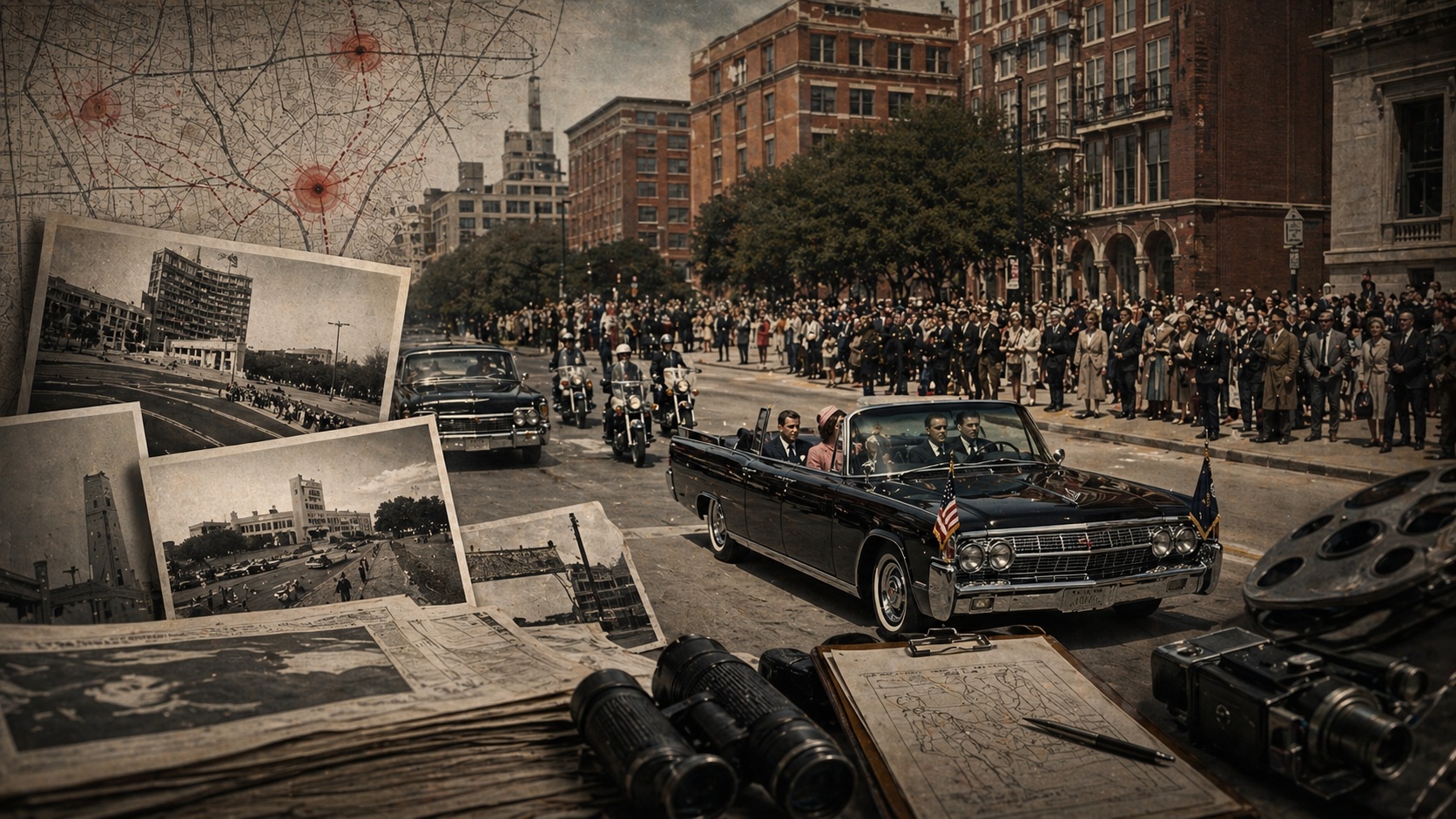
Assassination of John F. Kennedy
Kennedy was fatally shot during a Dallas motorcade.
Ask Dr. Whitmore about this eventBackground
At the time, John F. Kennedy was listed as sitting president. The record is categorized as successful assassination with a high confidence level.
Event details
The reported method was shooting. Successful; Kennedy was pronounced dead the same day.
Aftermath
Kennedy was pronounced dead at Parkland Memorial Hospital at 1:00 p.m. on November 22; Texas Governor John Connally, also riding in the limousine, was seriously wounded but recovered. Lee Harvey Oswald was arrested approximately 80 minutes later in the Texas Theatre after killing Dallas police officer J.D. Tippit nearby; he was shot and killed two days later by nightclub owner Jack Ruby in the Dallas Police Department basement while being transferred to county jail. The Warren Commission concluded in 1964 that Oswald acted alone; the House Select Committee on Assassinations reached a different conclusion in 1979, finding probable evidence of a conspiracy, though no definitive alternate perpetrator was identified. Lyndon Johnson was sworn in as president aboard Air Force One. Kennedy's death shocked the world and accelerated landmark civil rights and social legislation, while spawning enduring controversies about the full truth of the assassination.
Historical significance
The assassination of John F. Kennedy is among the most studied, debated, and culturally resonant events in modern world history. Politically, Kennedy's death enabled Lyndon Johnson to pass landmark legislation Kennedy had proposed but not yet secured, including the Civil Rights Act of 1964, the Voting Rights Act of 1965, and Medicare—profoundly reshaping American society. The Warren Commission's 1964 conclusion that Oswald acted alone has never achieved universal acceptance; the House Select Committee on Assassinations found probable evidence of a conspiracy in 1979; and declassified documents continue to fuel scholarly and public debate. The assassination accelerated both the escalation of American involvement in Vietnam under Johnson, freed from Kennedy's stated reservations, and the growth of a permanent national-security state. The event also led directly to the passage of the 25th Amendment (1967), clarifying presidential succession.
Sources
- Assassination of John F. Kennedy — Wikipedia contributors
- Warren Commission Report — President's Commission on the Assassination of President Kennedy / U.S. Government
- JFK Assassination Records Collection — National Archives and Records Administration
- List of United States presidential assassination attempts and plots — Wikipedia contributors
Related events
Plot Against John F. Kennedy
A reported Chicago plot against Kennedy shortly before Dallas remains debated but is often included among suspected plots.
Attempted Assassination of Harry S. Truman
Two Puerto Rican nationalists attacked Blair House while Truman was staying there.
Attempted Assassination of John F. Kennedy
Richard Pavlick planned to kill President-elect Kennedy with explosives but did not carry out the attack.