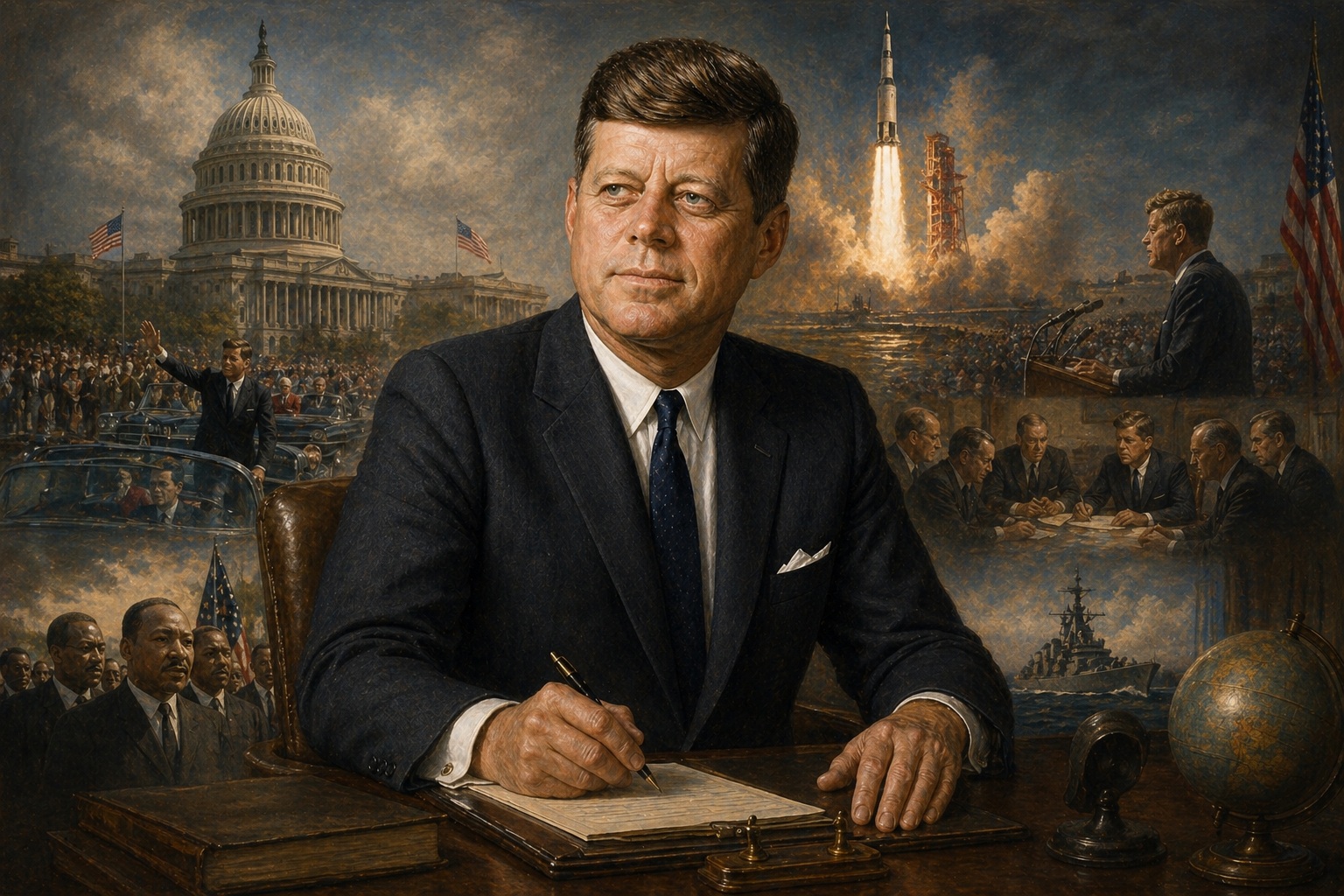
John F. Kennedy
35th President of the United States
Overview
John F. Kennedy was a major figure in American political history. Young Cold War president associated with the New Frontier, the space race, and crisis diplomacy. This entry is designed to support a public-facing biography page and AI question answering connected to the assassination-attempts explorer.
Early life
John F. Kennedy was born in Brookline, Massachusetts, on May 29, 1917, the second of nine children of Joseph P. Kennedy Sr. and Rose Fitzgerald Kennedy, a wealthy and politically prominent Irish-American family. He attended Choate School, briefly enrolled at Princeton before illness forced a withdrawal, then graduated from Harvard in 1940. His senior thesis on British appeasement was published as Why England Slept. He had been a sickly child but was athletic and socially adept; the contrast between his outward vigor and his serious underlying health conditions would define his public image.
Career
Kennedy served as a U.S. Navy officer in the Pacific during World War II; when his PT-109 patrol boat was sunk by a Japanese destroyer, he led his crew to safety and was decorated for heroism. He worked briefly as a journalist covering the 1945 San Francisco UN conference. He was elected to the U.S. House of Representatives from Massachusetts in 1946 and served three terms. In 1952 he defeated incumbent senator Henry Cabot Lodge Jr. and won a U.S. Senate seat. His 1956 book Profiles in Courage won the Pulitzer Prize. He narrowly missed the Democratic vice-presidential nomination in 1956, raising his national profile ahead of his 1960 presidential campaign.
Rise to prominence
John F. Kennedy became nationally significant through managed the cuban missile crisis, called for landing americans on the moon.
Presidency & public issues
Key public issues associated with John F. Kennedy include Cold War, Civil rights, Space race, Cuban Missile Crisis.
Assassination context
This individual appears in 3 incidents in the archive: Attempted Assassination of John F. Kennedy; Plot Against John F. Kennedy; Assassination of John F. Kennedy. The primary linked event is Assassination of John F. Kennedy. The target was killed in at least one related event.
Later life & death
The person's death became part of the national historical memory surrounding political violence in the United States.
Legacy
John F. Kennedy's legacy is commonly discussed through the themes of Cold War, Civil rights, Space race, and through the way the related incident shaped public memory, security practices, or political history.
Key facts
Known for
- Managed the Cuban Missile Crisis
- Called for landing Americans on the Moon
- Advanced civil rights legislation before his death
Major controversies
- Bay of Pigs invasion
- Vietnam escalation beginnings
- Personal scandals
Timeline
1917-05-29
John F. Kennedy born
John F. Kennedy was born in Brookline, Massachusetts.
1961-01-20
35th President of the United States
John F. Kennedy began service as 35th President of the United States.
1960-11-08
President-elect of the United States
John F. Kennedy began service as President-elect of the United States.
1963-11-22
John F. Kennedy died
John F. Kennedy died in Dallas, Texas.
Sources
- John F. Kennedy — Britannica
- John F. Kennedy — Miller Center
Related events

Attempted Assassination of John F. Kennedy
Richard Pavlick planned to kill President-elect Kennedy with explosives but did not carry out the attack.

Plot Against John F. Kennedy
A reported Chicago plot against Kennedy shortly before Dallas remains debated but is often included among suspected plots.
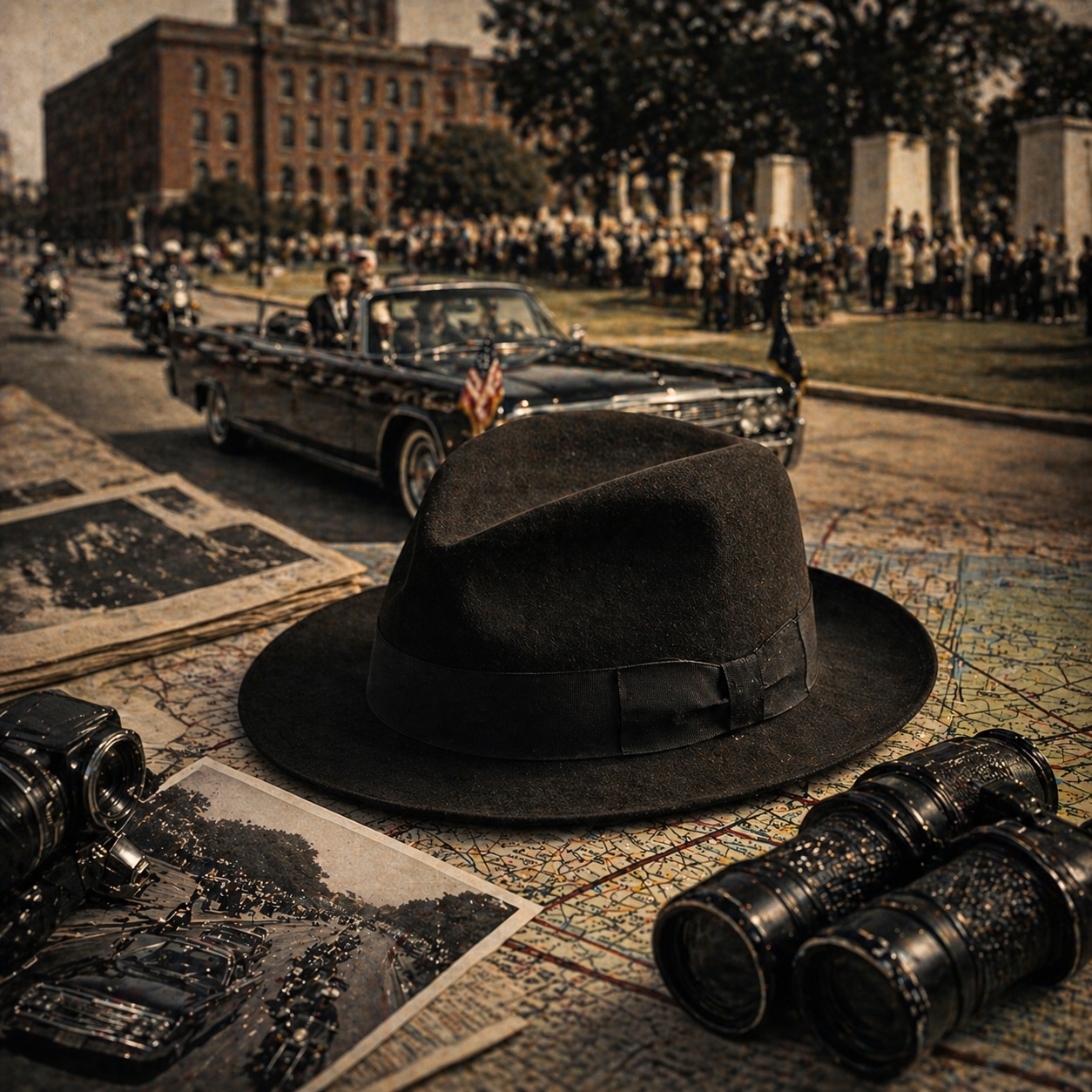
Assassination of John F. Kennedy
Kennedy was fatally shot during a Dallas motorcade.