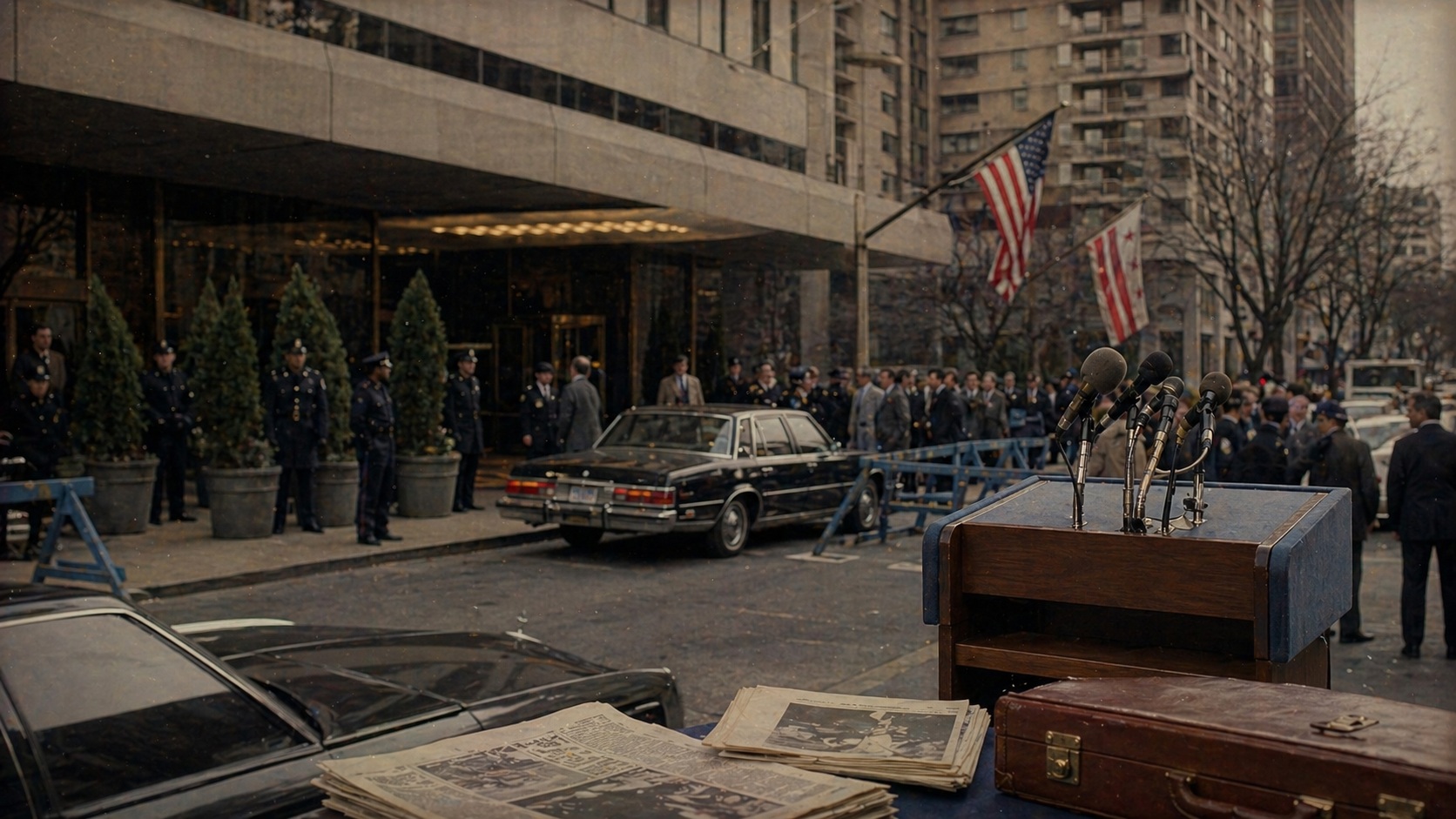
Attempted Assassination of Ronald Reagan
John Hinckley Jr. shot Reagan outside a Washington hotel; Reagan survived.
Ask Dr. Whitmore about this eventBackground
At the time, Ronald Reagan was listed as sitting president. The record is categorized as attempted assassination with a high confidence level.
Event details
The reported method was shooting. Failed; Reagan was seriously wounded but survived.
Aftermath
Reagan underwent emergency surgery; the bullet had lodged an inch from his heart and he had lost more than half his blood supply, but he was discharged from George Washington University Hospital after 13 days and made a full recovery. Press Secretary James Brady was shot in the head and left permanently disabled; police officer Thomas Delahanty and Secret Service agent Tim McCarthy were also wounded. John Hinckley Jr., who told authorities he had acted to impress actress Jodie Foster, was tried in 1982 and found not guilty by reason of insanity—a verdict that outraged the public and led Congress to pass the Insanity Defense Reform Act of 1984. Brady's permanent disability inspired the Brady Handgun Violence Prevention Act of 1993, which required background checks for firearm purchases at licensed dealers. Hinckley was unconditionally released from all supervision in 2022 after nearly four decades of psychiatric treatment and graduated release.
Historical significance
The attempted assassination of Ronald Reagan had consequences that reverberated for more than four decades. James Brady's permanent disability made him and his wife Sarah the nation's most visible advocates for handgun regulation; the Brady Handgun Violence Prevention Act, requiring background checks at licensed firearms dealers, was finally signed into law in 1993—twelve years after the shooting. Hinckley's not-guilty-by-reason-of-insanity verdict produced immediate and lasting legal reform: the Insanity Defense Reform Act of 1984 significantly tightened the standard for the insanity defense in federal courts. Reagan's remarkable composure—joking with surgeons from his hospital gurney—became defining images of his presidency that reinforced his public image and arguably contributed to his sustained political strength throughout his two terms.
Sources
- Attempted assassination of Ronald Reagan — Wikipedia contributors
- Brady Handgun Violence Prevention Act — Wikipedia contributors
- List of United States presidential assassination attempts and plots — Wikipedia contributors
Related events
Attempted Assassination of Harry S. Truman
Two Puerto Rican nationalists attacked Blair House while Truman was staying there.
Attempted Assassination of John F. Kennedy
Richard Pavlick planned to kill President-elect Kennedy with explosives but did not carry out the attack.
Plot Against John F. Kennedy
A reported Chicago plot against Kennedy shortly before Dallas remains debated but is often included among suspected plots.