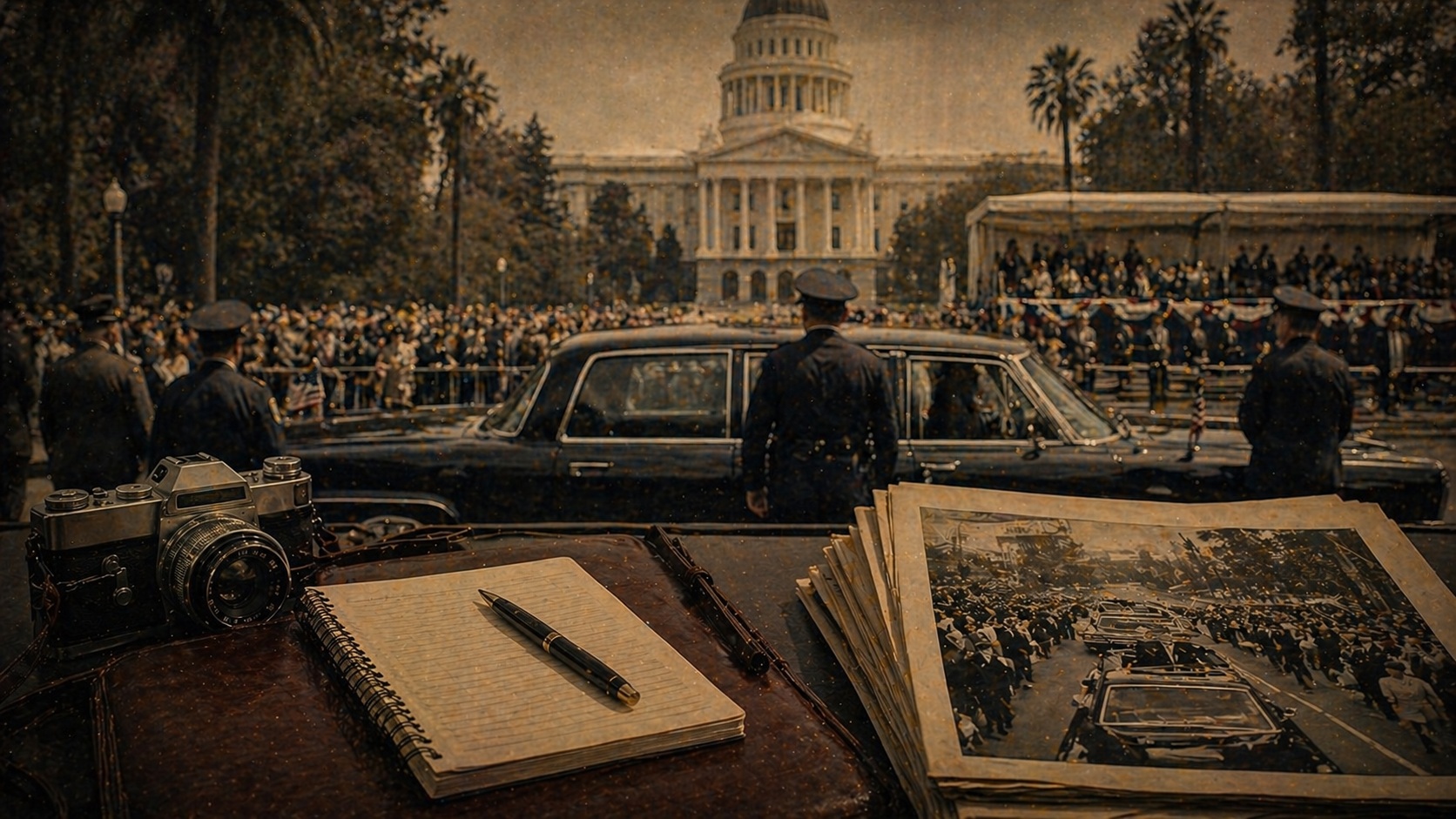
Attempted Assassination of Gerald Ford
Lynette Fromme pointed a gun at Ford in Sacramento, but it did not fire.
Ask Dr. Whitmore about this eventBackground
At the time, Gerald Ford was listed as sitting president. The record is categorized as attempted assassination with a high confidence level.
Event details
The reported method was shooting attempt. Failed; weapon did not fire.
Aftermath
Ford was unharmed; Secret Service agent Larry Buendorf grabbed Fromme's weapon before it could fire. Fromme, a follower of imprisoned cult leader Charles Manson, later said she was making a statement about environmental destruction and the plight of the California redwoods. She was tried, convicted of attempted assassination of the president, and sentenced to life in federal prison. Fromme escaped from Alderson Federal Prison in 1987 but was recaptured within two days; she was paroled in 2009 after serving 34 years. The attack—and a second attempt on Ford just 17 days later—prompted Congress to pass legislation formally expanding Secret Service authority and resources to protect the president.
Historical significance
The Fromme attempt was the first presidential assassination attempt since the Kennedy assassination and shook a nation already reeling from Watergate and the fall of Saigon. Together with the Moore attack just 17 days later, it produced the extraordinary statistical anomaly of two serious attempts on the same president within three weeks—an episode without parallel in American presidential history. The twin attacks drove significant legislative action, expanding Secret Service authority and resources. Fromme's escape from federal prison in 1987 generated additional press coverage; her 2009 parole after 34 years renewed public debate about the appropriate sentence for attempted presidential assassination. Her motive—a statement on behalf of environmental causes and Charles Manson's movement—added to the cultural complexity of an already-extraordinary episode.
Sources
- Lynette Fromme — Wikipedia contributors
- List of United States presidential assassination attempts and plots — Wikipedia contributors
Related events
Attempted Assassination of Gerald Ford
Sara Jane Moore fired at Ford in San Francisco; a bystander helped deflect the shot.
Attempted Assassination of Harry S. Truman
Two Puerto Rican nationalists attacked Blair House while Truman was staying there.
Attempted Assassination of John F. Kennedy
Richard Pavlick planned to kill President-elect Kennedy with explosives but did not carry out the attack.