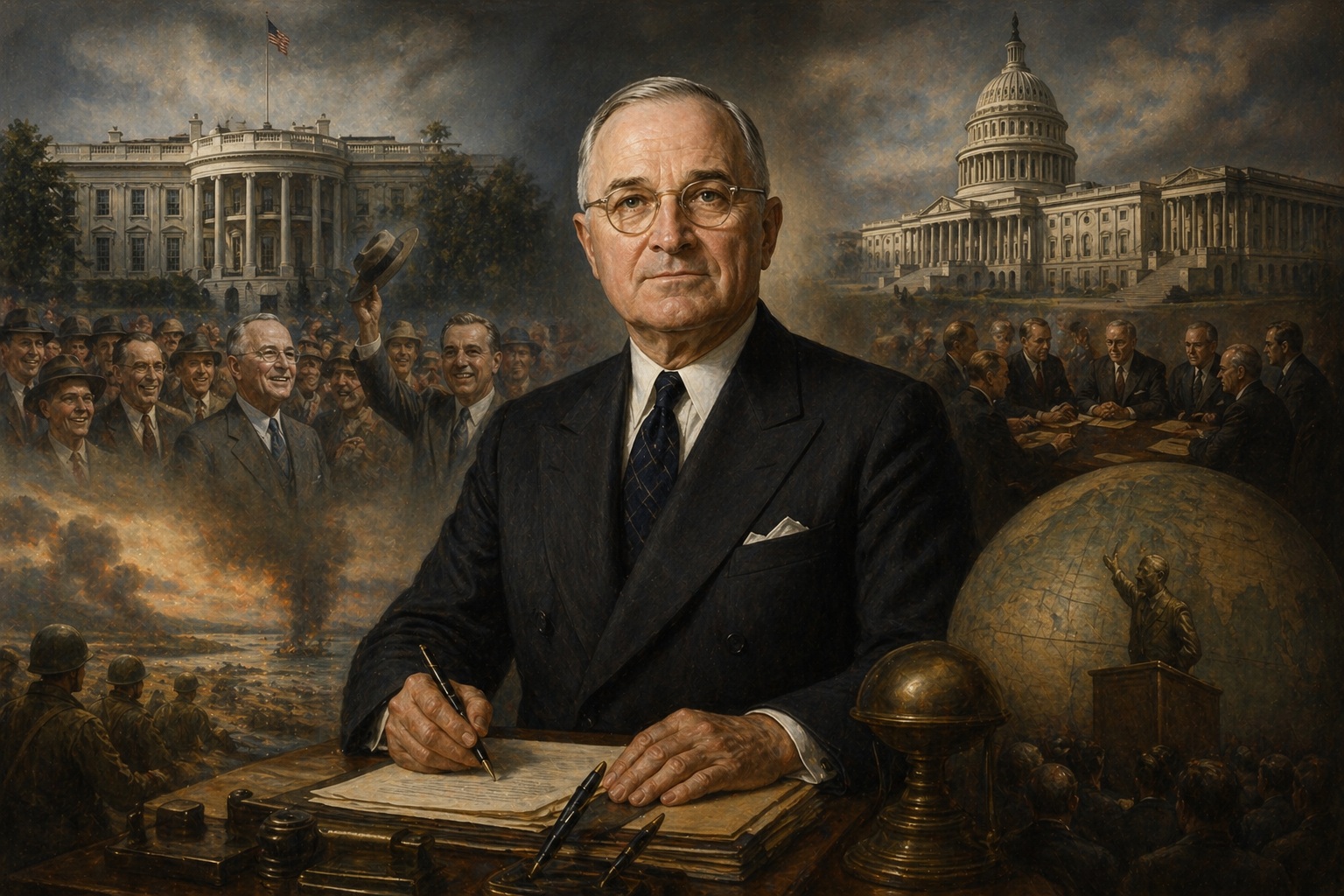
Harry S. Truman
33rd President of the United States
Overview
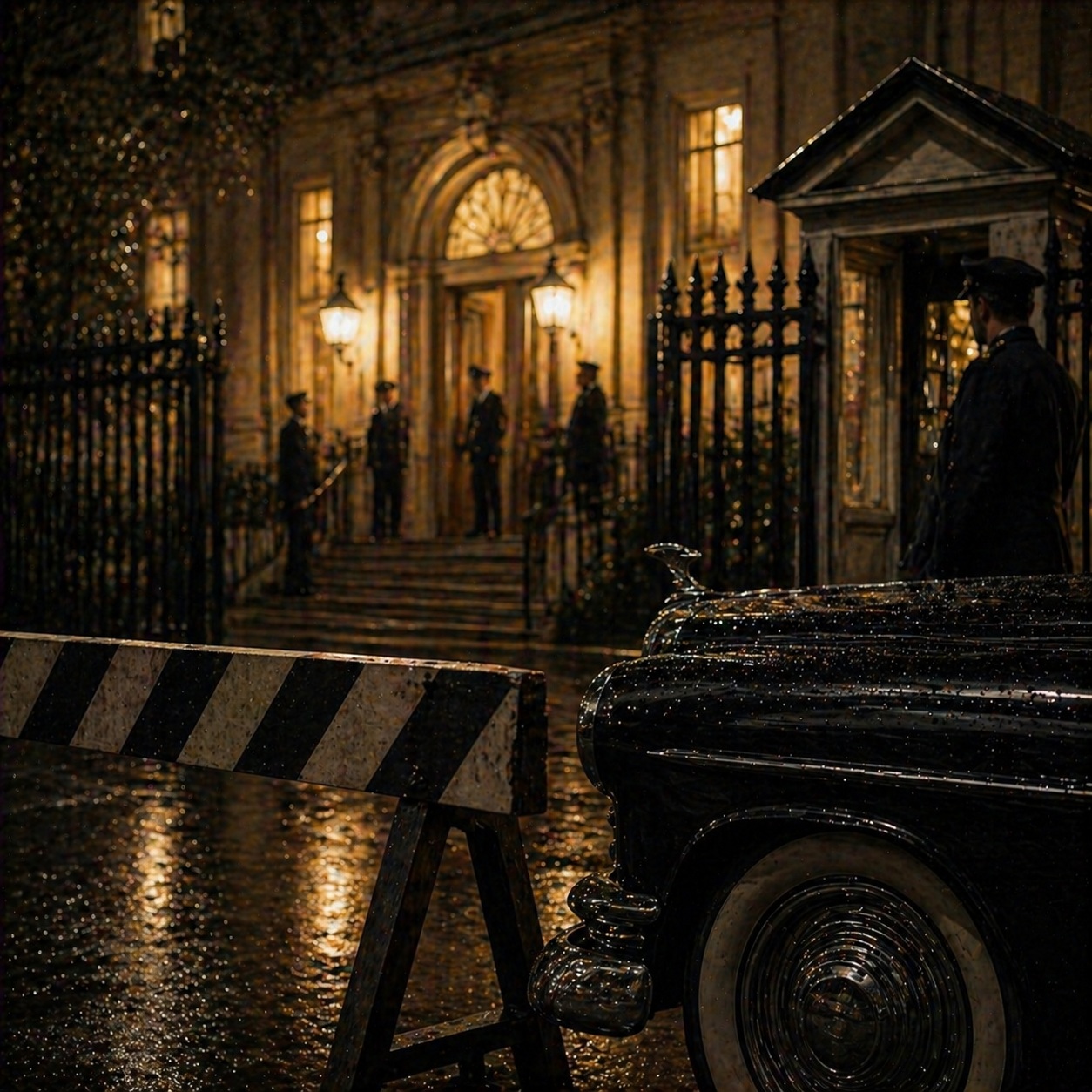
Harry S. Truman was a major figure in American political history. President at the end of World War II and beginning of the Cold War who survived the 1950 Blair House attack. This entry is designed to support a public-facing biography page and AI question answering connected to the assassination-attempts explorer.
Early life
Harry S. Truman was born in Lamar, Missouri, on May 8, 1884, to John Anderson Truman and Martha Ellen Young Truman. (The 'S' in his name is not an abbreviation — it honors both of his grandfathers.) The family settled in Independence, Missouri, when Harry was six. Poor eyesight barred him from West Point. Financial difficulties prevented him from attending college, and after high school he worked as a timekeeper for a railroad contractor, as a bank clerk, and eventually as a farmer on his family's land in Grandview, Missouri.
Career
Truman served with distinction in France during World War I, commanding an artillery battery that he forged into an effective fighting unit. After the war, he and a partner ran a haberdashery in Kansas City that failed in the 1921 recession. Backed by the Kansas City Pendergast machine, he won election as a Jackson County administrative judge in 1922 (a local executive, not a courtroom, role), presiding over county public works. He was elected to the U.S. Senate from Missouri in 1934 and won national respect by chairing the Senate Special Committee to Investigate the National Defense Program (the 'Truman Committee'), saving billions in wasteful wartime spending.
Rise to prominence
Harry S. Truman became nationally significant through authorized use of atomic bombs against japan, recognized israel.
Presidency & public issues
Key public issues associated with Harry S. Truman include Cold War, Civil rights, Atomic weapons, Korean War.
Assassination context
This individual is linked to one incident in the archive: Attempted Assassination of Harry S. Truman. The target survived the related event or events, or the plot did not reach the target.
Later life & death
Harry S. Truman died on December 26, 1972 in Kansas City, Missouri.
Legacy
Harry S. Truman's legacy is commonly discussed through the themes of Cold War, Civil rights, Atomic weapons, and through the way the related incident shaped public memory, security practices, or political history.
Key facts
Known for
- Authorized use of atomic bombs against Japan
- Recognized Israel
- Desegregated the armed forces
- Implemented containment policy
Major controversies
- Atomic bomb decision
- Korean War
- Firing of General MacArthur
Timeline
1884-05-08
Harry S. Truman born
Harry S. Truman was born in Lamar, Missouri.
1945-04-12
33rd President of the United States
Harry S. Truman began service as 33rd President of the United States.
1972-12-26
Harry S. Truman died
Harry S. Truman died in Kansas City, Missouri.
Sources
- Harry S. Truman — Britannica
- Harry S. Truman — Miller Center