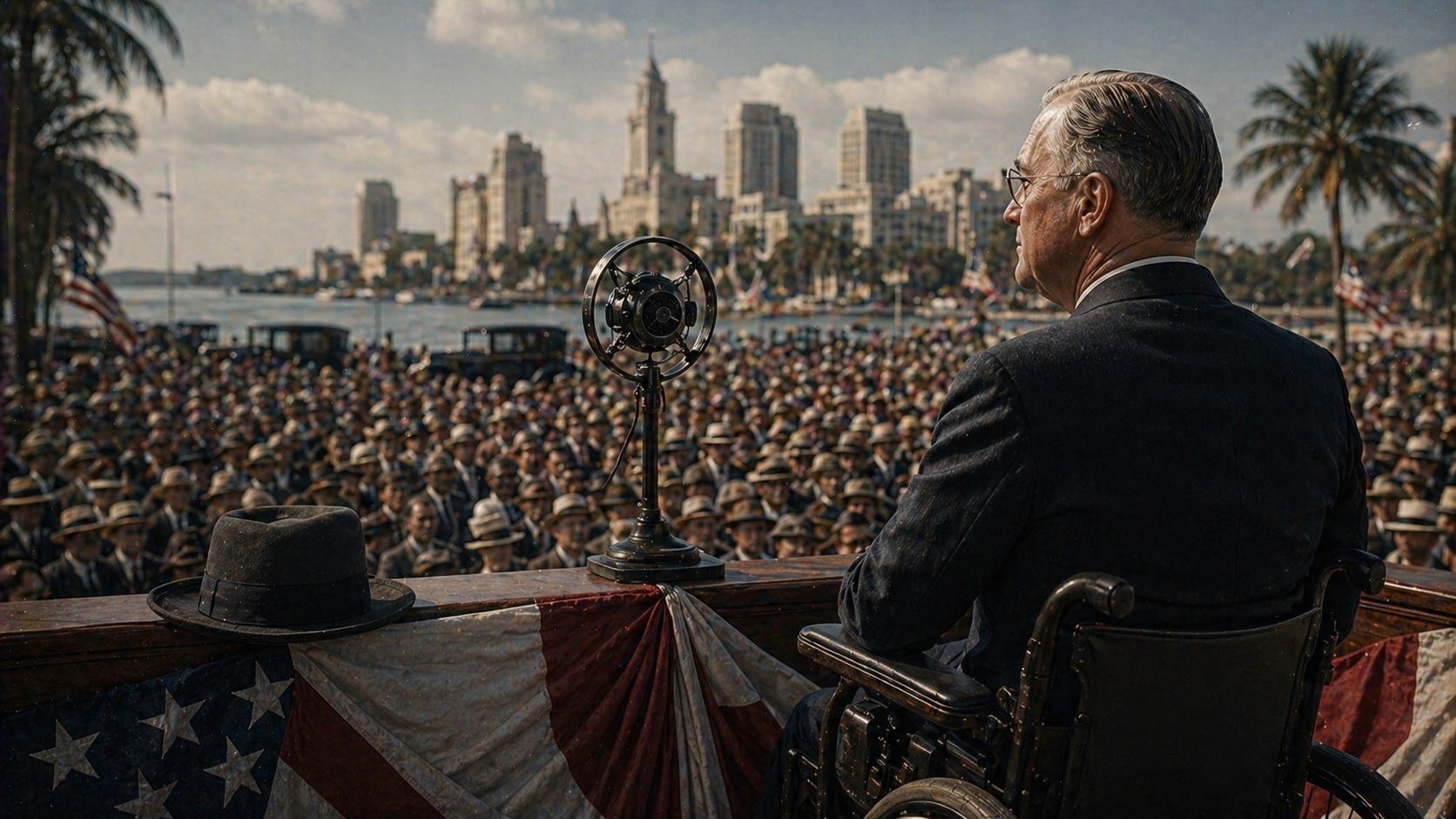
Attempted Assassination of Franklin D. Roosevelt
Giuseppe Zangara fired at Roosevelt in Miami; Roosevelt survived, but Anton Cermak died.
Ask Dr. Whitmore about this eventBackground
At the time, Franklin D. Roosevelt was listed as president-elect. The record is categorized as attempted assassination with a high confidence level.
Event details
The reported method was shooting. Failed; Roosevelt was unharmed, but Chicago Mayor Anton Cermak was killed.
Aftermath
Roosevelt was unharmed, but Chicago Mayor Anton Cermak, who was seated near Roosevelt in the crowd, was struck by gunfire and died from his wounds on March 6, 1933; four other bystanders were also wounded. Zangara was tackled immediately by the crowd after firing five shots; he showed no remorse and told authorities he hated all powerful people. He was quickly tried for assault, then recharged for murder after Cermak died, and was electrocuted at Florida State Prison on March 20, 1933—just 33 days after the shooting. Cermak's death touched off a political controversy; some historians have argued he may have been the primary target given his ties to Chicago mob enemies, though the evidence remains inconclusive. The near-miss had a profound effect on Roosevelt as he prepared to assume the presidency during the depth of the Great Depression.
Historical significance
The near-assassination of Roosevelt-elect in February 1933 is remarkable for what it did not change: unlike McKinley's death or Lincoln's assassination, the failed attack produced no immediate legislative response and had no visible effect on Roosevelt's political trajectory. What it did produce was the swift and controversial execution of Giuseppe Zangara—one of the fastest applications of capital punishment following a political crime in American history—and a lasting historical debate about whether Chicago Mayor Anton Cermak, not Roosevelt, was the intended primary target. The episode has also been studied as an illustration of how close American history came to a very different outcome on the eve of the New Deal.
Sources
- Giuseppe Zangara — Wikipedia contributors
- List of United States presidential assassination attempts and plots — Wikipedia contributors
Related events
Plot Against Herbert Hoover
A reported anarchist bomb plot against President-elect Hoover was disrupted in Argentina.
Assassination of Huey Long
Senator Huey Long was shot at the Louisiana State Capitol by Dr. Carl Weiss; Long died two days later from his wounds.