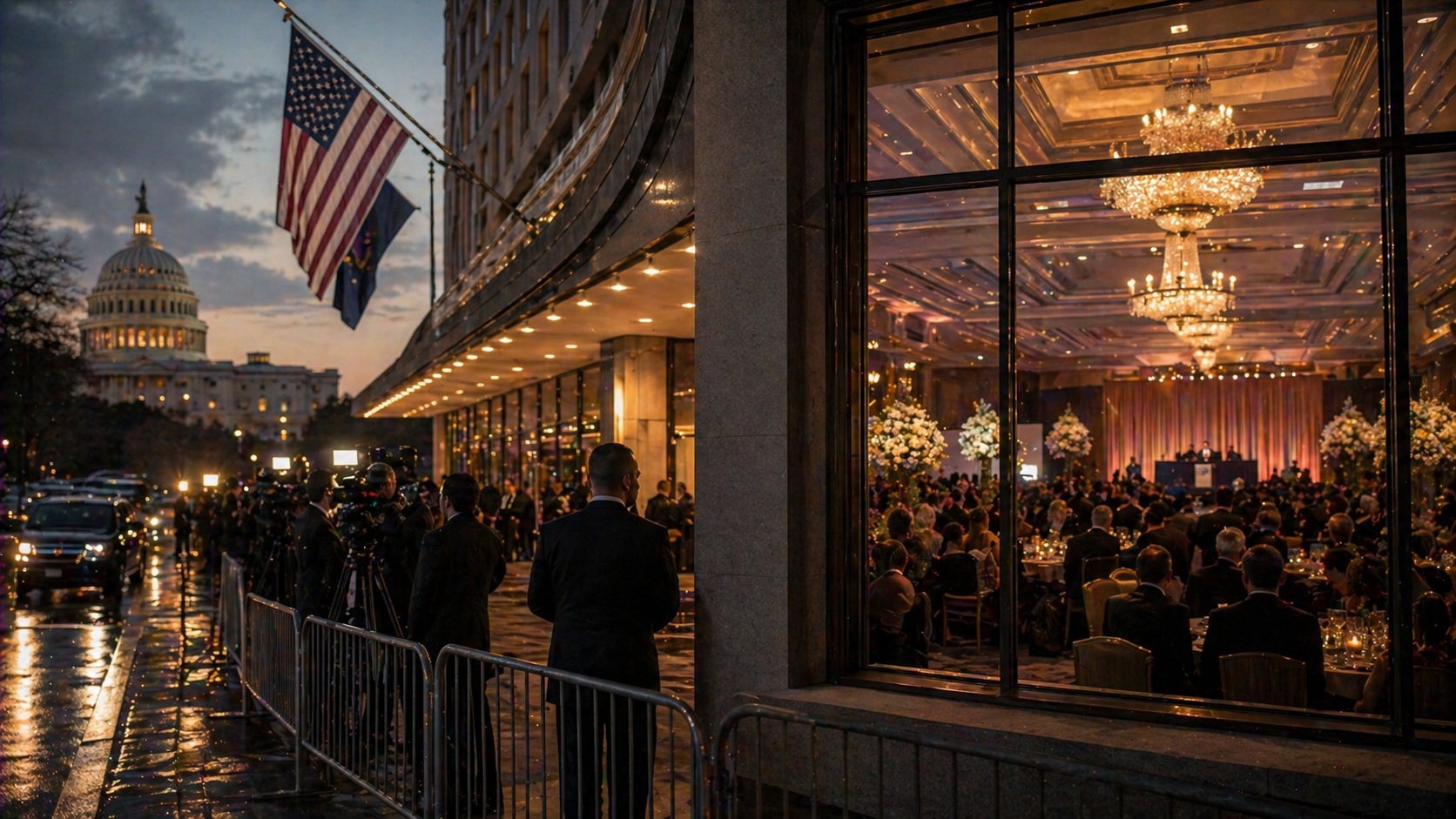
Attempted Assassination of Donald Trump
Allen was charged after an alleged armed attempt connected to the White House Correspondents' Dinner; the case remains pending.
Ask Dr. Whitmore about this eventDisputed elements
- details, intent, or credibility may be disputed; present with caution
Background
At the time, Donald Trump was listed as sitting president. The record is categorized as attempted assassination with a medium confidence level.
Event details
The reported method was armed attack. Failed; suspect charged, Trump unharmed, case pending.
Aftermath
Allen was apprehended at the Washington Hilton on the evening of April 25, 2026, during the White House Correspondents' Association Dinner; Trump was attending the event and was not harmed. Allen was found with a weapon and was alleged to have been attempting to access a restricted area near the president; one person was injured during the apprehension. He was charged with attempting to assassinate the president and related weapons and security offenses; as of late April 2026 the case remains pending trial. The incident raised immediate questions about screening protocols and access procedures at large public events attended by the president, and the Secret Service announced a review of procedures for events held at non-government venues. It also renewed broader public debate about the security risks posed by high-profile gatherings where the president appears alongside members of the press and political establishment.
Historical significance
The WHCD incident is the most recent entry in the archive and highlights an enduring tension in presidential security: large public events attended by the president, journalists, and political figures simultaneously require open access—consistent with their democratic and press-freedom character—and rigorous security screening. The attack reinforced questions about whether standard venue-screening protocols are adequate when the president attends semi-public gatherings at non-government facilities. It also contributed to ongoing policy discussion about whether the president should regularly attend events of this nature given the security complexities they create. As the case is still pending adjudication as of this writing, its full legacy remains to be written.
Sources
- Suspect in White House Correspondents' Dinner Shooting Charged with Attempt to Assassinate the President — U.S. Department of Justice
- List of United States presidential assassination attempts and plots — Wikipedia contributors
Related events
Attempted Assassination of Donald Trump
Leingang stole a forklift and intended to use it against Trump's motorcade.
Attempted Assassination of Barack Obama
A pipe-bomb package addressed to Obama was intercepted during a broader mail-bomb campaign.
Attempted Assassination of Donald Trump
Ferrier mailed a ricin-containing threatening letter to Trump at the White House.