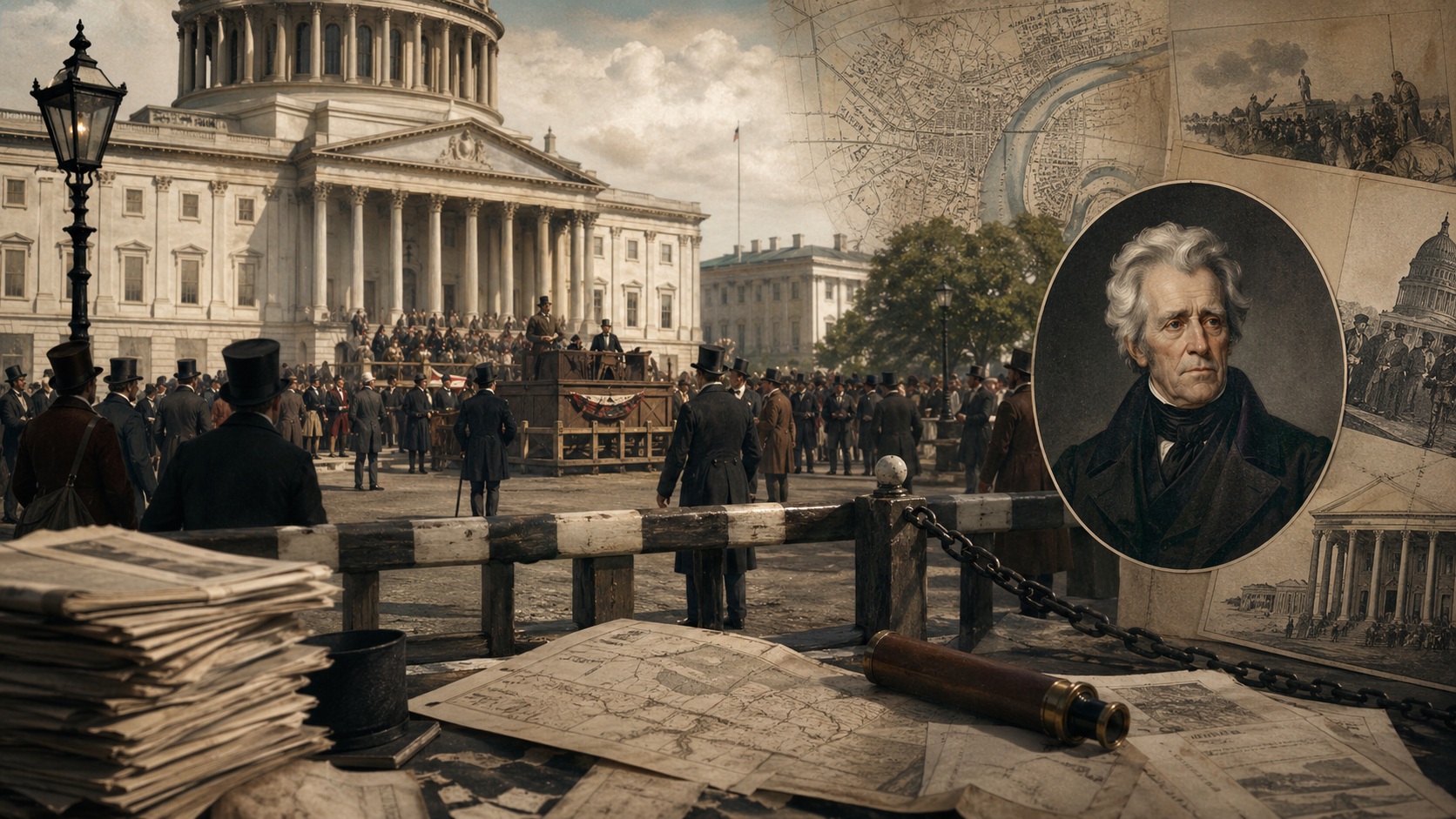
Attempted Assassination of Andrew Jackson
Richard Lawrence attempted to shoot President Andrew Jackson, but both pistols failed to fire.
Ask Dr. Whitmore about this eventBackground
At the time, Andrew Jackson was listed as sitting president. The record is categorized as attempted assassination with a high confidence level.
Event details
The reported method was shooting attempt. Failed; both pistols misfired.
Aftermath
Jackson was unharmed; he reportedly charged at Lawrence with his cane before bystanders—including Representative Davy Crockett—subdued the attacker. Lawrence was arrested on the spot and examined by physicians who determined he was mentally deranged. He was tried in April 1835 and the jury returned a not-guilty verdict by reason of insanity in under five minutes. He was committed to various asylums for the rest of his life. The incident briefly inflamed political suspicions, with Jackson's allies pointing fingers at Whig opponents, and it sparked early debate about presidential security.
Historical significance
The first documented assassination attempt on a sitting American president, the Jackson attack became a touchstone in national debates about democratic accessibility and the dangers of populist politics. Richard Lawrence's acquittal by reason of insanity is one of the earliest prominent applications of the insanity defense in American legal history and influenced how courts would approach similar cases for generations. The incident also temporarily inflamed partisan tensions, with Jackson's allies accusing political opponents of conspiracy, illustrating how quickly assassination attempts become fodder for political warfare. Because no formal presidential protection existed at the time, the event began a long, slow conversation about whether the president could—or should—be shielded from the public he was elected to serve.
Sources
- Richard Lawrence (alleged assassin) — Wikipedia contributors
- List of United States presidential assassination attempts and plots — Wikipedia contributors