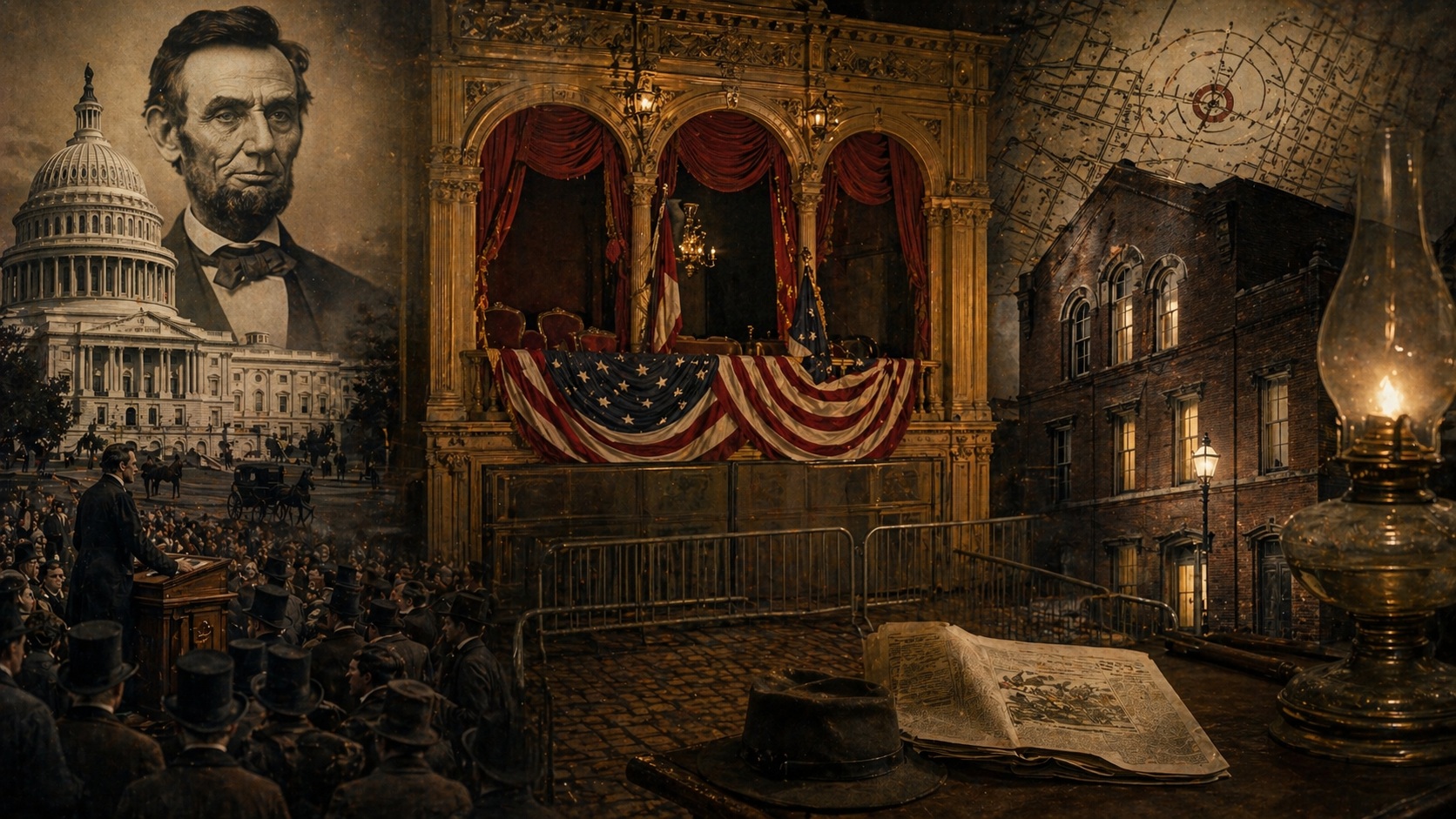
Assassination of Abraham Lincoln
John Wilkes Booth shot Lincoln at Ford's Theatre; Lincoln died the next morning.
Ask Dr. Whitmore about this eventBackground
At the time, Abraham Lincoln was listed as sitting president. The record is categorized as successful assassination with a high confidence level.
Event details
The reported method was shooting. Successful; Lincoln died on April 15, 1865.
Aftermath
Lincoln was shot at Ford's Theatre on the evening of April 14 and never regained consciousness; he died the following morning at 7:22 a.m. on April 15, 1865. John Wilkes Booth escaped the theater immediately after firing but was tracked down by federal troops to a Virginia farm, where he was shot and killed on April 26. Secretary of State William Seward was seriously wounded in a simultaneous knife attack by Lewis Powell; both Seward and Vice President Johnson survived assaults by their assigned attackers. Eight conspirators were tried by a military tribunal; four—including Mary Surratt, Lewis Powell, David Herold, and George Atzerodt—were hanged on July 7, 1865. Lincoln's death shaped the course of Reconstruction and elevated Andrew Johnson to the presidency, with profound and lasting consequences for the nation.
Historical significance
The assassination of Abraham Lincoln is the most consequential act of political violence in American history. Lincoln's death at the close of the Civil War replaced a president committed to a relatively lenient Reconstruction with Andrew Johnson, whose intransigence torpedoed meaningful post-war reform and left formerly enslaved people without the legal protections Lincoln had envisioned. The event hardened the nation's emotional attachment to Lincoln, elevating him to near-mythological status and making him the most revered president in American public memory. Legally, the trial and hanging of the conspirators established a precedent for military tribunals in cases of crimes against the government, a precedent invoked again during later wars. Congress took no immediate legislative action on presidential security, but the assassination began the long process of public and official reckoning with the need for formal protective measures.
Sources
- Assassination of Abraham Lincoln — Wikipedia contributors
- Manhunt: The 12-Day Chase for Lincoln's Killer — James L. Swanson / Simon & Schuster
- List of United States presidential assassination attempts and plots — Wikipedia contributors
Related events
Plot Against Andrew Johnson
Andrew Johnson was targeted in Booth's broader conspiracy, but George Atzerodt failed to act.
Plot Against Abraham Lincoln
An alleged plot to assassinate Lincoln in Baltimore before his inauguration led to a secret nighttime transit through the city.